

A business should seek legal advice before making a decision that changes its ownership, obligations or exposure to risk. Common moments include choosing a business structure, signing an important contract, hiring workers, launching a brand or receiving a legal demand. Early advice gives you time to weigh options before a deadline or commitment limits them.
Every business operates differently. A template or AI tool can help you organize questions, but it may miss obligations specific to your agreement, workforce or jurisdiction. Fractional general counsel can help you plan for recurring decisions and identify when a matter needs specialist advice.
Five milestones when legal advice can help
1. Choosing or changing your business structure
In Ontario, common options include a sole proprietorship, partnership and corporation. Discuss liability, ownership and plans for raising capital with a lawyer and tax adviser before settling on a structure. If you are starting with co-founders, talk through voting rights, what each person will contribute and what happens if someone leaves. Those decisions can inform a shareholder agreement and your approach to corporate governance.
2. Drafting or negotiating core contracts
Get a commercial contract review before signing a significant customer or supplier agreement, or before using the same template across many deals. Ask how the contract handles payment, changes to the scope of work, liability, termination and disputes. For example, a supplier agreement that renews automatically may require notice well before your team plans to decide whether to renew.
3. Hiring employees or engaging contractors
Seek employment law advice for employers before issuing offers or relying on a contractor arrangement. In Ontario, the working relationship matters when determining employee status under employment standards law. A contract label alone does not decide it. Ask counsel to review how the work will be supervised and how the agreement addresses pay, confidentiality and termination.
4. Protecting intellectual property
Before investing in a brand or releasing a product, identify who owns the names, designs, software and other work you rely on. Review agreements with founders, employees and vendors to see what rights the business owns or licenses. An intellectual property lawyer can help assess searches, registrations or other protections appropriate to the asset.
5. Receiving a cease-and-desist letter or lawsuit
Contact counsel promptly after receiving a formal demand or court documents. Record when and how they arrived, preserve relevant messages and agreements, and ask counsel to confirm which deadlines apply. Litigation counsel can advise on the response and any immediate steps needed to protect your position.
When fractional in-house counsel makes sense
A single transaction or dispute may call for a lawyer engaged for that matter. If contract reviews, employment questions and governance decisions come up regularly, fractional legal services can give your team a consistent point of contact. Counsel who knows the business can help prioritize the work and identify when to bring in a specialist.
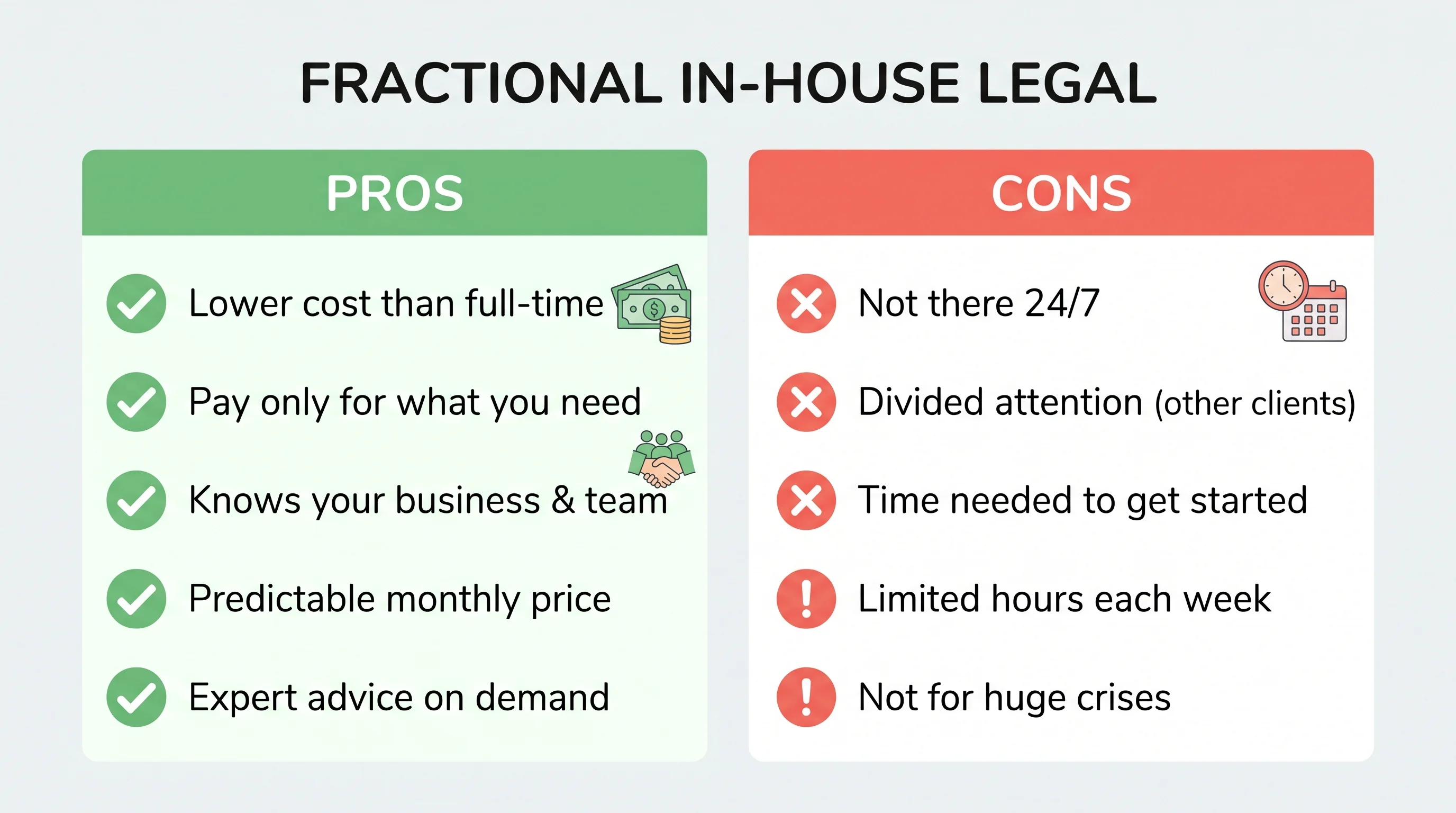
Start by listing the decisions your team faces each month and the ones likely to arise next quarter. Ask prospective counsel what is included, how priorities are set and how work outside the agreed scope is handled.
Frequently Asked Questions
What is the difference between a business lawyer and in-house counsel?
An outside business lawyer often advises on a specific matter, such as a contract or transaction. In-house counsel works within the company and advises on ongoing legal decisions. A business can use both, bringing in outside specialists when a matter calls for their expertise.
Why do small businesses avoid hiring lawyers?
Some small businesses delay getting legal advice because they are unsure what it will cost, have other priorities, or do not yet see a risk. Asking for a defined scope and fee estimate can make it easier to budget for advice before a decision becomes urgent.
What is fractional in-house legal counsel?
Fractional in-house legal counsel is ongoing legal support on a part-time or otherwise defined basis. Counsel learns how the business operates and can advise on recurring issues such as contracts, governance and risk. Scope, fees and availability depend on the engagement.
Further reading: Ontario’s guide to business structures and Ontario’s guide to employee status.
Does this match a current business issue?
For business owners who want to discuss which of the firm’s services fits their situation. Ontario business-law inquiries.